
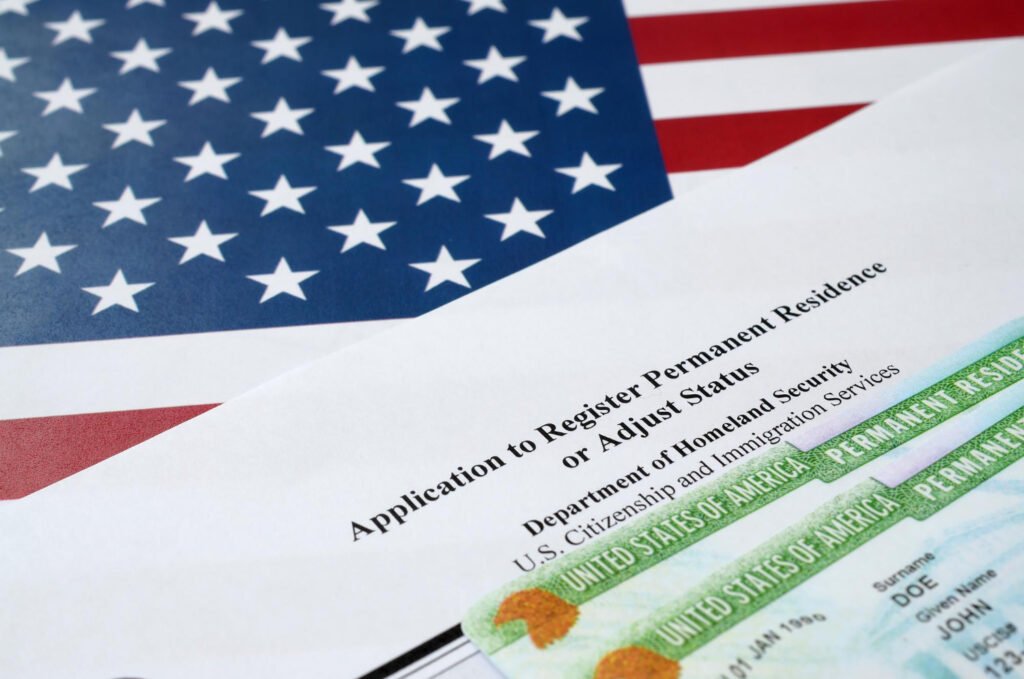
The E-2 Visa Reality: Nonimmigrant Intent vs. Permanent Residency
The E-2 Treaty Investor visa is a non-immigrant visa for foreign nationals from a treaty country who come to the United States to direct and develop a qualifying business investment. By law, E-2 holders must maintain nonimmigrant status and intend to depart the U.S. when that status ends, even though the visa’s validity period can depend on the treaty agreement with the investor’s treaty country. For E-2 visa holders and prospective investors asking can an E-2 visa lead to a green card, the short answer is no: the E-2 does not create a direct route to permanent residency, but it may still be possible to move to a green card through other immigrant options, including employment-based such as EB-2 or Eb-3 or perm processs, EB-5 investor, or family-sponsored paths. This article explains how those transitions work, the nonimmigrant-intent rule that shapes them, common pitfalls to avoid, and the timeline issues that matter when planning a long-term U.S. immigration strategy.
Understanding the “Intent to Depart” Requirement
E-2 applicants must show nonimmigrant intent: a genuine plan for the e 2 visa holder to leave the U.S. when status ends and return to their home country. Consular officers and USCIS evaluate ties to the home country, the temporary nature of the investment, and consistency with immigrant intent rules, along with the following requirements for E-2 eligibility and intent documentation. Evidence should reflect planned temporary U.S. presence while maintaining strong connections abroad.
Dual Intent and the E-2 Visa: What You Need to Know
Unlike H-1B or L visas, E-2 does not formally allow dual intent. However, applicants can pursue immigrant petitions while maintaining E-2 status if they avoid convincing the adjudicator they intended to immigrate at entry. E-2 holders can generally maintain status through extensions in two-year increments, though renewals can become more sensitive once immigrant filings begin. Timing and strategy matter—filing an immigrant petition immediately after entry can raise risks at renewal or re-entry, so the filing strategy should be planned as part of the overall green card process.
Top Strategies to Transition from an E-2 Visa to a Green Card
Employment-Based Green Cards (EB-2 and EB-3 Categories)
- PERM labor certification route: Have your company sponsor you for EB-2 (for applicants with advanced degrees or exceptional ability) or EB-3. Under EB-3, skilled workers generally need at least two years of experience, while professionals typically need a bachelor’s degree. Employer-sponsored petitions are common for E-2 holders who have built a U.S. business and can justify the job offer, and the PERM route includes labor market testing. In limited cases, an EB-2 national interest waiver may let you self petition without a job offer by showing your work serves the national interest.
- Timing: PERM and I-140 processing times can take months to years depending on priority date, country of chargeability, visa availability, and whether labor certification is required in the overall process. Plan filings to minimize conflicts with E-2 renewals.
The EB-5 Investor Visa: Scaling Up Your Investment
- EB-5 is an immigrant visa that grants conditional permanent residence for qualifying investors who meet job-creation and substantial investment thresholds, and for many foreign investors it offers a more direct path to permanent residence than E-2 status. The minimum investment is $800,000 in a targeted employment area and $1.8 million in a non-TEA area. EB-5 generally requires creating at least 10 full-time jobs for U.S. workers, though the annual cap of 10,000 applications and visa availability can affect timing.
- Consider a regional center project versus direct investment; counsel can model job creation metrics and capital sourcing to avoid inadmissibility issues, and while a regional center project may make job creation easier to document for passive investors, direct investment may require the investor to actively manage a new business.
EB-1A or EB-1C: For Extraordinary Ability and Multinational Executives
- EB-1A (extraordinary ability): Available without employer sponsorship if you can document sustained national or international acclaim.
- EB-1C (multinational manager/executive): Suitable for E-2 holders who expanded an existing foreign company to the U.S. and now manage a qualifying affiliate or subsidiary.
- EB-1 categories may allow faster adjustment and avoid PERM if eligibility is well-documented.
Family-Sponsored Green Cards: Marriage and Relatives
- Marriage to a U.S. citizen is often the fastest route to a family based green card; spouses are treated as immediate relatives, so there are no annual caps on those cases, and the process usually involves an I-130 petition plus, if eligible, an I-485 adjustment application.
- Other family members may qualify through different rules: some immediate relatives move faster, while others fall into a preference category where visa availability drives wait times. Certain green card holders can also sponsor qualifying relatives, but the categories and timelines differ. A spouse and unmarried children under 21 may accompany an E-2 holder to the U.S., though children age out of derivative status at 21.
Common Pitfalls: Risks to Avoid When Pursuing a Green Card from an E-2 Status
The Danger of Filing an Adjustment of Status Too Early
Filing I-485 while on E-2 to adjust status can trigger questions about immigrant intent at entry or renewal. If the priority date isn’t current or the immigrant petition isn’t approved, an applicant is only eligible to file when the petition and visa availability requirements are met, and premature filing may risk denial or complicate future travel, renewals, and adjustment timing as part of green card transitioning.
How Green Card Petitions Affect E-2 Visa Renewals and Travel
Consular renewals and re-entry: A pending immigrant petition may complicate visa interviews abroad, especially when a visa holder seeks consular renewal or re-entry. Consular officers may question whether you maintain nonimmigrant intent.
Practical step: Discuss travel plans with counsel, and consider consulting an experienced immigration attorney before travel or renewal interviews, before attending consular appointments. Keep strong evidence of ongoing E-2 activity and ties to your home country if renewal interviews occur.
Frequently Asked Questions About E-2 to Green Card Transitions
Can my E-2 business sponsor me for a Green Card?
Yes—if the business can meet employer-sponsored requirements (PERM and I-140) for EB-2/EB-3, or qualify as a multinational entity for EB-1C. The company must demonstrate legitimate job needs, ability to pay wages, and compliance with labor rules.
How long does it take to go from an E-2 visa to a Green Card?
Timelines for green card applications vary widely: PERM plus I-140 and I-485 can take 1–5+ years depending on category, visa availability, and processing times. EB-1 routes may be faster; EB-5 timelines depend on project structure, annual caps, and USCIS processing. Country of chargeability (India, China, Philippines, Mexico) significantly affects wait times.
Can my spouse get a Green Card through their own employment?
Yes. If your spouse independently qualifies for an employment-based immigrant petition (EB-2/EB-3/EB-1), they can pursue their own green card path. Alternatively, spouses of E-2 holders can obtain E-2 dependent status and pursue their own employer-sponsored petitions.
Ready to Plan Your Transition? Let Immigration Lawyers Guide Your Path to Permanent Residency
Miranda & Maldonado, P.C. provides immigration services to help E-2 investors evaluate the best immigrant options and build timing strategies that protect E-2 renewals and travel while pursuing permanent residency. We offer:
- Personalized eligibility assessment to determine whether clients are eligible for EB-1, EB-2, EB-3, EB-5, or family routes.
- PERM planning, I-140 preparation, EB-5 structuring, and documentation strategy.
- Guidance on timing to reduce immigrant-intent risks and maintain lawful presence.
Contact Miranda & Maldonado, P.C. for a focused case review and a clear roadmap from E-2 status to a green card process for foreign nationals.