
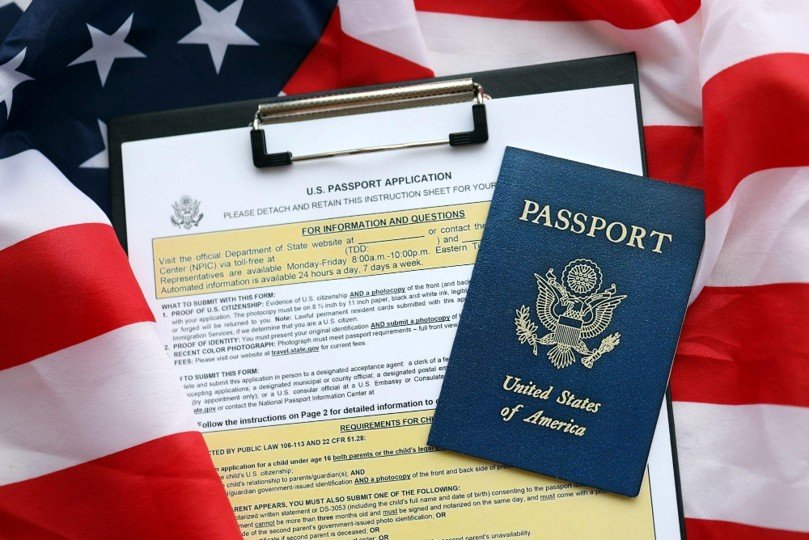
Family-based immigration allows eligible relatives of U.S. citizens and Lawful Permanent Residents (LPRs) to pursue permanent residence in the United States. The process varies according to the sponsor’s immigration status, the qualifying family relationship, visa availability, and whether the beneficiary completes the process from inside or outside the United States.
This guide explains the principal family-based Green Card categories, eligibility requirements, application procedures, supporting documentation, priority dates, government fees, potential reasons for denial, and other important considerations for families pursuing lawful permanent residence.
1. What is Family-Based Immigration in the United States?
Family-based immigration is a legal pathway that allows U.S. citizens and Lawful Permanent Residents to petition for certain qualifying relatives to become permanent residents. Eligibility depends on both the petitioner’s immigration status and the specific relationship between the petitioner and beneficiary.
A qualifying relationship alone does not automatically grant permanent residence. The petitioner and beneficiary must complete the applicable immigration procedures and demonstrate that all relevant eligibility requirements have been satisfied.
How the Family-Based Green Card Process Works
The process generally begins when a qualifying U.S. citizen or Lawful Permanent Resident files Form I-130, Petition for Alien Relative, with U.S. Citizenship and Immigration Services (USCIS). This petition is used to establish the qualifying family relationship.
After the petition stage, the beneficiary may proceed through consular processing or, if eligible, adjustment of status within the United States. Visa availability, admissibility requirements, financial sponsorship, supporting documentation, medical requirements, and other factors may affect how the case proceeds.
Immediate Relatives vs. Family Preference Categories: Key Differences
Family-based immigration is divided primarily into immediate-relative and family-preference classifications. Immediate-relative classifications are available to certain close relatives of U.S. citizens and are not subject to annual numerical visa limits.
Family-preference categories cover other qualifying relationships involving U.S. citizens and Lawful Permanent Residents. These categories are subject to annual numerical limits, meaning beneficiaries may need to wait for an immigrant visa to become available according to their preference category and priority date.
2. Who Qualifies for Family Residency in the U.S.?
Eligibility for family-based permanent residence depends primarily on the sponsor’s immigration status and relationship to the beneficiary. U.S. citizens have broader family sponsorship options, while Lawful Permanent Residents generally may petition for spouses and certain unmarried children.
Determining the correct immigration category is important because it affects visa availability, potential waiting periods, and how the beneficiary moves through the permanent residence process.
Category 1: Immediate Relatives of U.S. Citizens (No Annual Limits)
Immediate relatives occupy a distinct position under U.S. immigration law because immigrant visas in these classifications are not subject to the annual numerical limits applicable to family-preference categories.
However, exemption from annual numerical limits does not guarantee approval or immediate issuance of permanent residence. The petitioner and beneficiary must still satisfy all applicable immigration requirements.
Spouse of a U.S. Citizen (IR-1 / CR-1)
A U.S. citizen may petition for a qualifying foreign national spouse. Depending on the length of the marriage when permanent resident status is obtained, the spouse may receive permanent resident status subject to the rules governing either IR-1 or conditional CR-1 classification.
Marriage-based applicants must establish that the marriage is legally valid and was entered into in good faith rather than primarily for the purpose of obtaining an immigration benefit.
Unmarried Children Under 21 (IR-2)
A qualifying unmarried child under the age of 21 of a U.S. citizen may generally fall within the immediate-relative classification. The petitioner must provide documentation establishing the qualifying parent-child relationship.
Age and marital status can be particularly important in determining the appropriate immigration classification, making accurate documentation essential throughout the process.
Parents of U.S. Citizens Aged 21 or Older (IR-5)
U.S. citizens who are at least 21 years old may petition for qualifying parents to obtain permanent residence. Evidence must establish both the petitioner’s U.S. citizenship and the legally recognized parent-child relationship.
Different documentation may be necessary depending on whether the relationship involves a biological parent, stepparent, adoptive parent, or other circumstances recognized under immigration law.
Category 2: Family Preference Categories (Subject to Caps & Wait Times)
Family-preference categories are available to certain relatives who do not qualify as immediate relatives. Because these categories are numerically limited, approval of a family petition does not necessarily mean that an immigrant visa will be immediately available.
Beneficiaries generally receive a priority date associated with the petition and may need to wait until visa availability permits them to continue toward permanent residence.
F1: Unmarried Adult Sons and Daughters of U.S. Citizens
The F1 preference category applies to unmarried sons and daughters of U.S. citizens who are 21 years of age or older. Because this classification is numerically limited, beneficiaries may experience a substantial waiting period before a visa becomes available.
Changes in personal circumstances, particularly marriage, can affect the applicable immigration classification and should be evaluated carefully.
F2A & F2B: Spouses, Minor Children, and Adult Children of LPRs (Green Card Holders)
The F2 categories allow Lawful Permanent Residents to petition for certain qualifying family members. F2A generally covers spouses and qualifying unmarried children under 21, while F2B generally applies to unmarried sons and daughters age 21 or older.
These classifications are subject to numerical limits. The beneficiary’s age, marital status, priority date, and visa availability can therefore have significant consequences for the case.
F3: Married Sons and Daughters of U.S. Citizens
The F3 category permits U.S. citizens to petition for their married sons and daughters. Unlike immediate-relative classifications, this category is subject to annual numerical limitations.
Because visa availability may involve lengthy waiting periods, applicants should monitor their priority dates and the applicable Visa Bulletin throughout the process.
F4: Brothers and Sisters of Adult U.S. Citizens
A U.S. citizen who is at least 21 years old may petition for a qualifying brother or sister under the F4 preference category. This category is also subject to annual numerical limitations and can involve significant waiting periods.
Establishing the sibling relationship generally requires civil documentation demonstrating the qualifying family connection between the petitioner and beneficiary.
3. Step-by-Step Application Process for Family Residency
The process for obtaining a family-based Green Card involves several stages. The exact procedure depends on the beneficiary’s location, immigration history, family category, visa availability, and eligibility to complete permanent residence processing inside or outside the United States.
Understanding these stages before filing can help families prepare the appropriate forms and supporting evidence for each part of the case.
Step 1: Filing Form I-130 (Petition for Alien Relative)
The process generally begins with Form I-130, Petition for Alien Relative. The qualifying U.S. citizen or Lawful Permanent Resident files this petition with USCIS to establish the family relationship with the beneficiary.
Supporting evidence varies according to the relationship and may include birth certificates, marriage certificates, proof of U.S. citizenship or permanent residence, and other relevant documentation. Approval of Form I-130 establishes the qualifying relationship for purposes of the petition but does not, by itself, grant a Green Card.
Step 2: Consular Processing vs. Adjustment of Status (Form I-485)
After the petition stage, the beneficiary must follow the appropriate pathway toward permanent residence. The two principal procedures are consular processing and adjustment of status.
Which pathway applies depends on factors including where the beneficiary resides, eligibility to adjust status, visa availability, manner of entry into the United States, immigration history, and other legal requirements.
Applying from Outside the U.S. (Consular Processing via NVC)
Beneficiaries completing the process abroad generally proceed through the National Visa Center (NVC) after the appropriate petition is approved and the case is eligible to move forward.
The NVC stage can involve payment of required fees, completion of the immigrant visa application, submission of civil and financial documents, and preparation for an immigrant visa interview at the appropriate U.S. Embassy or Consulate.
Applying from Inside the U.S. (Adjustment of Status)
Certain beneficiaries physically present in the United States may qualify to apply for permanent residence through adjustment of status using Form I-485.
Physical presence in the United States alone does not establish eligibility. The beneficiary must satisfy the applicable adjustment requirements, which may involve factors such as manner of entry, immigration history, admissibility, statutory restrictions, and immigrant visa availability when required.
Step 3: Supporting Financial Documents & Form I-864 (Affidavit of Support)
Many family-based applicants require a qualifying sponsor to submit Form I-864, Affidavit of Support. This document is used to demonstrate that the intending immigrant has sufficient financial sponsorship under the applicable federal requirements.
The sponsor generally must provide evidence concerning household income and financial circumstances. Depending on the case, qualifying assets, household-member income, or a joint sponsor may potentially be used when the petitioner’s income alone does not satisfy the applicable requirement.
Step 4: The Immigration Interview and Biometrics
Depending on the applicable procedure, the beneficiary may be required to provide biometrics and attend an immigration interview. Government agencies use these procedures as part of identity verification, background screening, and adjudication of eligibility.
Applicants should carefully review their previously submitted forms and supporting documentation before an interview and be prepared to address questions concerning their eligibility and qualifying family relationship.
4. Required Documents for a Family Green Card Application
Documentation requirements depend on the family relationship and immigration pathway involved. Applicants should provide complete, accurate, and consistent evidence throughout the process.
Common documentation can include evidence of the petitioner’s citizenship or permanent resident status, proof of the qualifying family relationship, civil records, financial sponsorship evidence, identification documents, and other records required for the particular case.
Essential Checklist for Petitioners and Beneficiaries
The petitioner may need to provide proof of U.S. citizenship or Lawful Permanent Resident status together with evidence establishing the qualifying relationship. The beneficiary may need to provide identity documents, birth records, passport information, marriage or divorce records when applicable, and other required civil documentation.
Foreign-language documents generally require appropriate English translations when submitted to U.S. immigration authorities. Additional evidence may also be necessary depending on the immigration category and individual circumstances.
5. Processing Times and Priority Dates: How Long Does It Take?
There is no single processing time that applies to every family-based Green Card case. The timeline depends on factors such as the family category, visa availability, government processing times, country of chargeability, completeness of the application, and whether additional evidence or review is required.
Immediate relatives of U.S. citizens are not subject to the annual numerical limits governing family-preference visas. Preference-category applicants, however, may face additional waiting periods before an immigrant visa becomes available.
Understanding the Visa Bulletin and Waiting Periods
The Department of State’s Visa Bulletin is an important resource for family-preference applicants because it provides information concerning immigrant visa availability according to preference category, priority date, and applicable country of chargeability.
Visa dates can advance, remain unchanged, or retrogress. For this reason, applicants in preference categories should monitor the applicable Visa Bulletin rather than relying exclusively on generalized processing-time estimates.
6. How Much Does Family-Based Residency Cost? (USCIS & NVC Fees)
The total cost of obtaining family-based permanent residence varies according to the immigration pathway and forms required in the particular case. Expenses may include USCIS filing fees, Department of State or NVC-related fees, medical examination costs, document preparation, translations, and other case-specific expenses.
Government filing fees can change. Applicants should verify current amounts with the appropriate U.S. government agency before filing rather than relying on outdated fee schedules.
7. Common Reasons for Family Green Card Denials (And How to Avoid Them)
Family-based petitions and permanent residence applications can encounter problems when eligibility requirements are not established or documentation contains material deficiencies. Issues involving admissibility, immigration history, financial sponsorship, the qualifying relationship, or inaccurate information may affect the outcome.
Carefully reviewing eligibility and documentation before submission can reduce preventable errors, although complete documentation does not guarantee approval.
Ineligibility and Public Charge Issues
Applicants must satisfy the applicable eligibility and admissibility requirements for permanent residence. Depending on the circumstances, certain immigration violations, criminal matters, fraud or misrepresentation, health-related grounds, and other statutory issues may affect admissibility.
Financial sponsorship requirements can also be relevant in family-based immigration cases. Because admissibility determinations are highly dependent on individual circumstances, potential issues should be evaluated carefully before filing.
Incomplete Documentation or Errors on Forms
Missing documents, inconsistent answers, incorrect information, unsigned forms, insufficient evidence, or inadequate translations can cause delays and may result in requests for additional evidence or other adverse consequences.
Applicants should ensure that information remains consistent across immigration forms and supporting records and should respond accurately when government agencies request additional documentation.
8. Why Working with an Experienced U.S. Immigration Lawyer Matters
Family-based immigration can involve complex questions concerning eligibility, adjustment of status, consular processing, visa availability, admissibility, financial sponsorship, and previous immigration history.
An experienced U.S. immigration attorney can evaluate the circumstances of a case, identify potential legal issues before filing, assist with documentation, explain the appropriate procedural pathway, and provide representation when complications arise.
9. Frequently Asked Questions (FAQ)
Family-based immigration requirements vary significantly according to the petitioner’s status, the beneficiary’s relationship to the petitioner, and the beneficiary’s individual immigration circumstances. The following questions address several common concerns families may encounter during the permanent residence process.
Can a Lawful Permanent Resident Sponsor a Spouse or Child?
Yes. A Lawful Permanent Resident may petition for certain qualifying spouses and unmarried children through the applicable family-preference classifications.
The beneficiary’s age and marital status are particularly important because they can determine whether the case falls within F2A or F2B. Visa availability must also be considered because these categories are subject to numerical limitations.
Can I Stay in the U.S. While My Family-Based Green Card Is Pending?
Filing a family petition does not automatically provide lawful immigration status or authorization to remain in the United States. Whether an applicant can remain in the country while a case is pending depends on the particular immigration filing, existing status, eligibility for adjustment of status, and other circumstances.
Applicants should not assume that an approved or pending Form I-130, by itself, authorizes them to remain in the United States.
What Happens If the Sponsor’s Income Is Too Low?
If the petitioner’s income does not satisfy the applicable Form I-864 financial requirements, other qualifying financial resources may potentially be considered depending on the circumstances.
These can include qualifying assets, income from certain household members, or a qualifying joint sponsor. The appropriate solution depends on the financial circumstances and applicable Affidavit of Support requirements.
10. Protect Your Family’s Future: Schedule a Consultation Today
Obtaining permanent residence through a qualifying family relationship can be an important step toward building a future together in the United States. However, determining the correct category, preparing supporting evidence, understanding visa availability, and selecting the appropriate immigration procedure require careful attention.
If you are considering sponsoring a relative or pursuing a family-based Green Card, speaking with an experienced U.S. immigration attorney can help you understand the requirements that apply to your circumstances, identify potential complications, and determine the appropriate next steps for your case.